Lokta: The Bark Paper That Outlasts Everything Else in the Archive
Nepali documents written on lokta a thousand years ago are still flexible. Wood-pulp paper from 1950 crumbles. The difference is fibre length, and it is worth understanding.
By Yugo Bazar · · 2 min read
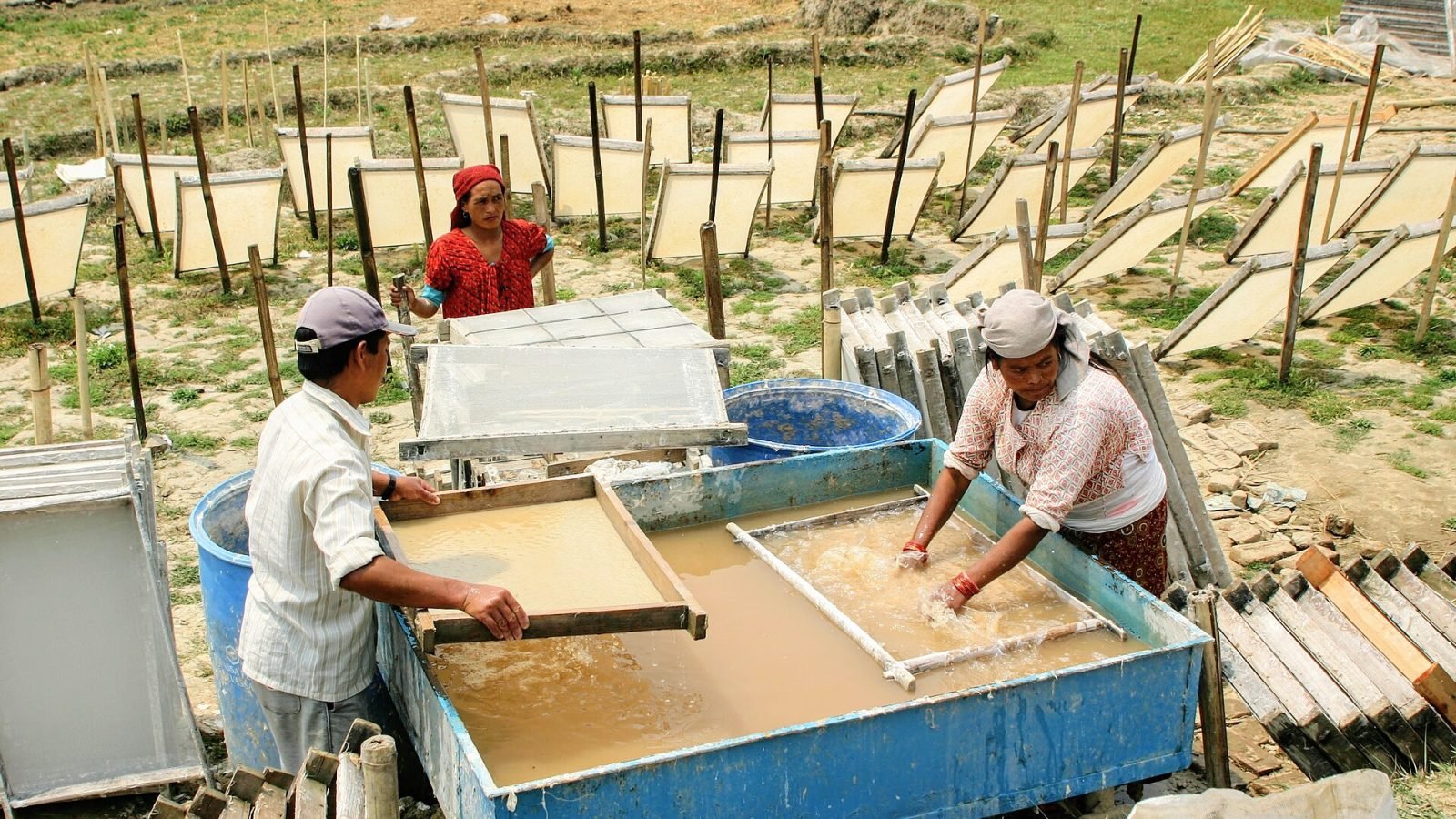
Photo: Gozitano · CC BY-SA 4.0 · Wikimedia Commons
In the Nepal National Archives there are manuscripts on lokta paper dating back past the twelfth century that can still be turned by hand. In the same building, twentieth-century wood-pulp documents are going yellow and brittle at the edges. That gap is not about storage. It is about what the paper is made of.
The plant
Lokta is the inner bark of two Himalayan shrubs in the Daphne genus, growing between roughly 1,600 and 4,000 metres. The critical thing is that harvesting does not kill the plant: the stem is cut above the root collar and regenerates over four to six years. Managed properly it is a genuinely renewable forest crop, and in much of Nepal it is one of the few cash crops available at that altitude.
Why it lasts
Two reasons, both physical.
Fibre length. Lokta fibres are long and interlock in a tangled mat rather than lying flat. Wood-pulp fibres are short and are further shortened by mechanical processing. Long interlocked fibres give a sheet that flexes instead of cracking.
No acid. Conventional papermaking uses acidic sizing, and residual acid slowly hydrolyses the cellulose from the inside — this is why old books go brown and snap. Lokta is cooked with wood ash, which is alkaline. It has no internal acid to destroy itself with.
There is a third, less quantifiable advantage: the bark contains compounds that insects avoid. Lokta manuscripts survive in unsealed storage in a climate with a monsoon, which is not a small claim.
How a sheet is made
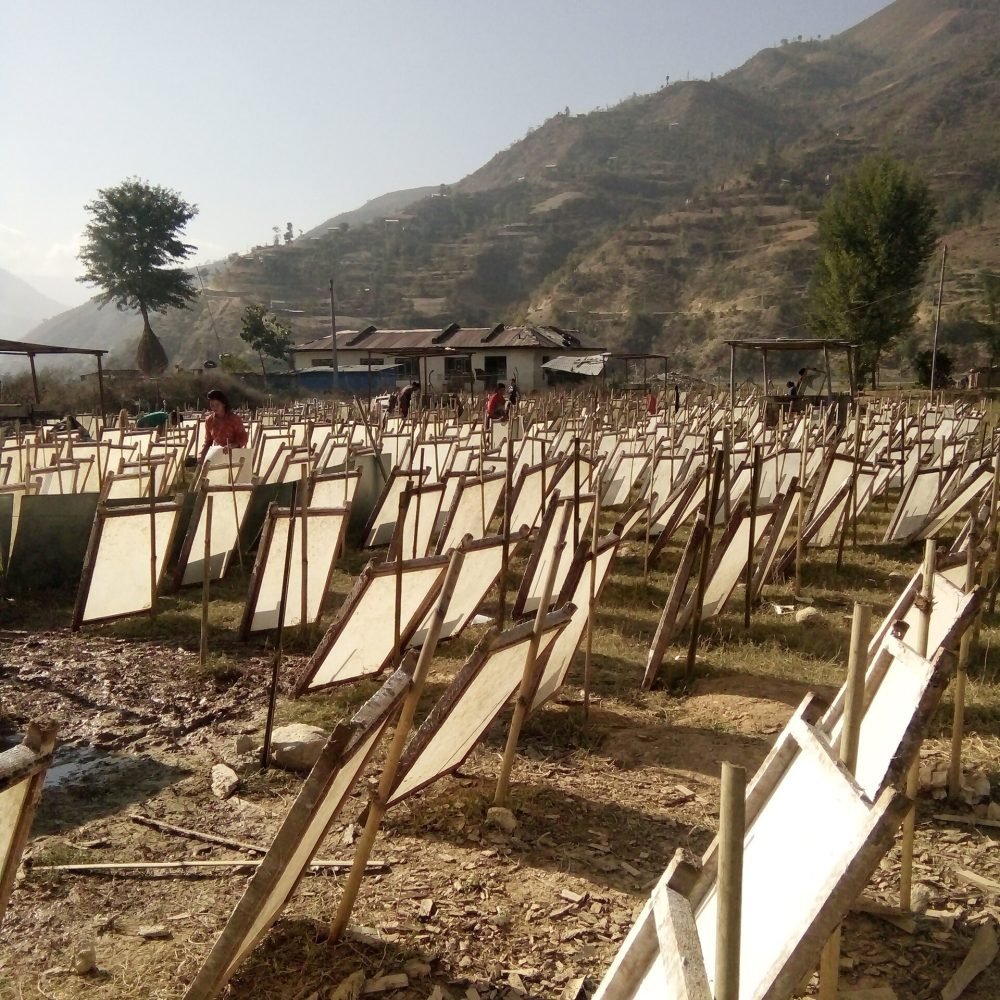
The bark is soaked, then cooked for hours with wood ash to break down the binding lignin. It is beaten by hand with wooden mallets until the fibres separate — this is the slow step and it determines the character of the finished sheet. The pulp is suspended in water and poured onto a cloth-covered frame floating in a tank, spread by hand, and the frame is lifted out and stood in the sun to dry.
Because the sheet dries on its frame rather than being pressed, it keeps a slightly textured surface and a deckle edge, and no two sheets are the same thickness.
Using it
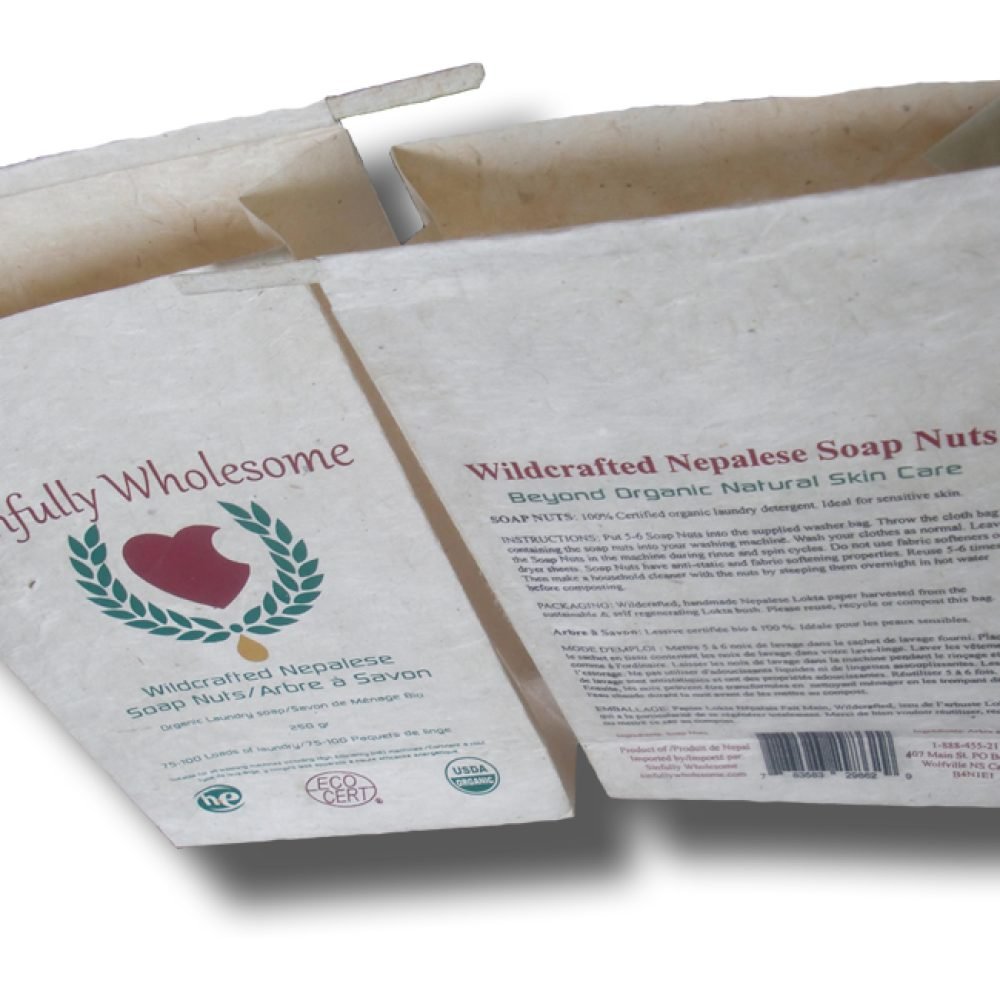
It takes fountain pen ink exceptionally well — no feathering, and heavy enough to write both sides. It takes block-printing ink. It is a poor choice for inkjet printers, which want a smooth uniform surface, and a good choice for anything you want to keep.
Keep it out of direct sun and away from damp. It needs no other treatment at all.